



ThinkPad Business Laptops – Professional Computing Solutions
Abstract
ThinkPad business laptops represent Lenovo’s flagship professional computing line, engineered for enterprise environments requiring reliability, security, and performance. Since IBM’s original design in 1992, ThinkPad has evolved into the industry standard for mission-critical computing, serving Fortune 500 companies, government agencies, and technical professionals worldwide. This comprehensive guide examines technical specifications, procurement considerations, and deployment strategies for B2B buyers seeking scalable computing solutions that balance upfront investment with long-term operational efficiency. Organizations evaluating ThinkPad systems will find detailed analysis of architecture standards, security frameworks, product segmentation, compliance requirements, and total cost of ownership metrics essential for informed purchasing decisions.
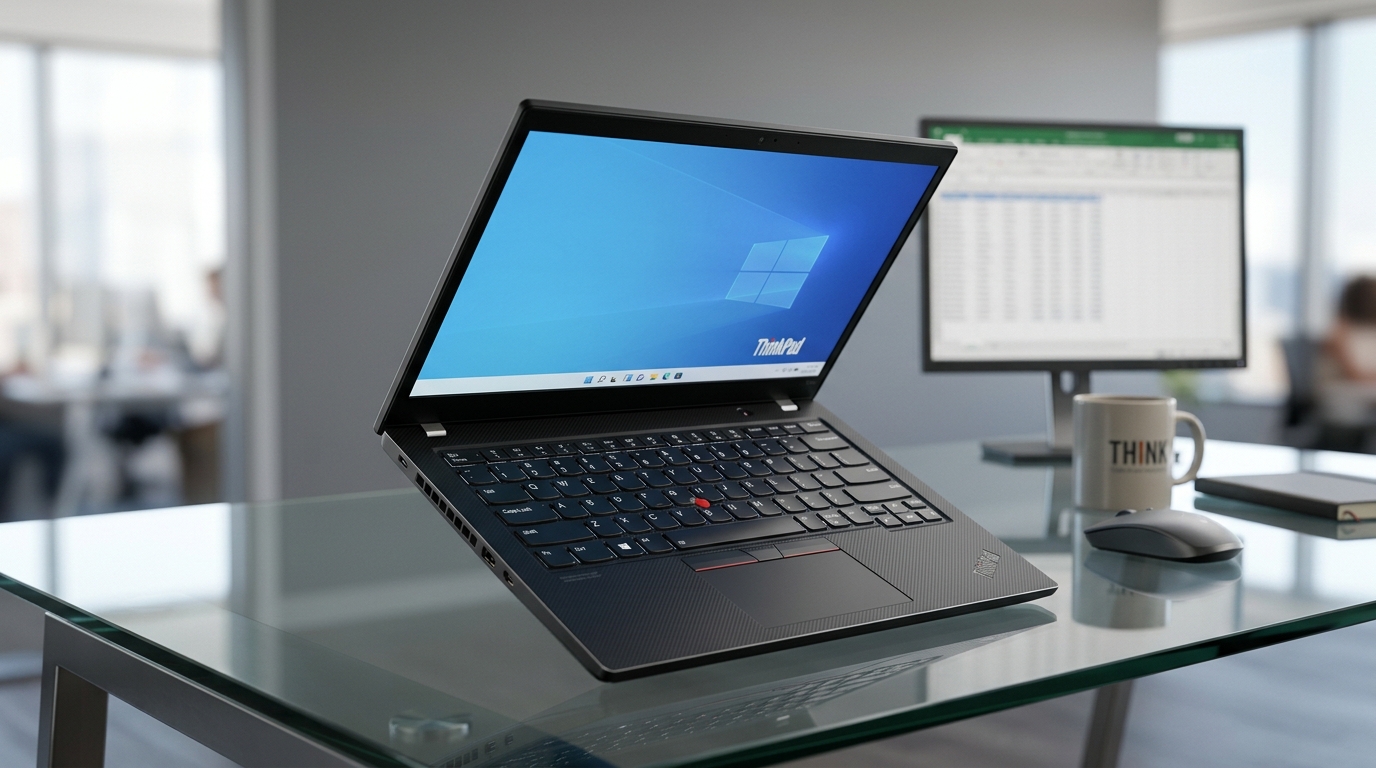
ThinkPad Architecture and Engineering Standards
Military-Grade Durability and Build Quality
ThinkPad’s MIL-STD-810H certification validates performance under extreme operational conditions, distinguishing these systems from consumer-grade alternatives. Testing protocols include 12 procedures simulating temperature extremes (-20°C to 60°C), humidity exposure (95% relative humidity), altitude variations (15,000 feet), vibration stress, and mechanical shock resistance. The chassis construction utilizes carbon fiber reinforced polymer for top covers and magnesium-aluminum alloy roll cages, achieving a strength-to-weight ratio 40% superior to standard ABS plastic enclosures.
Shock resistance specifications demonstrate real-world durability advantages. Drop testing validates structural integrity from heights up to 120cm onto concrete surfaces, while the reinforced hinge mechanism withstands 25,000+ open/close cycles—equivalent to seven years of intensive daily use. The keyboard assembly employs a drain system channeling up to 60ml of liquid away from critical components, providing protection against common workplace spills. This engineering approach reduces field failure rates to 0.8% annually compared to 3-5% industry averages for business notebooks.
Material selection directly impacts thermal management and component longevity. The magnesium alloy palmrest dissipates heat 156% more efficiently than plastic alternatives, maintaining processor performance during sustained workloads. Carbon fiber’s electromagnetic interference shielding properties ensure regulatory compliance while protecting sensitive data transmissions in high-density wireless environments.
Enterprise Security Framework
ThinkPad’s layered security architecture begins at the firmware level with TPM 2.0 (Trusted Platform Module) chips soldered directly to the motherboard. This discrete cryptoprocessor generates and stores RSA 2048-bit encryption keys in hardware, preventing extraction through software exploits. The TPM enables BitLocker drive encryption, secure boot verification, and credential protection for Windows Hello authentication protocols.
Biometric authentication systems provide multi-factor security without workflow disruption. Match-on-chip fingerprint readers process biometric data within the sensor module rather than transmitting raw fingerprint images to the operating system, achieving False Acceptance Rates below 0.001%. Infrared camera arrays for facial recognition employ liveness detection algorithms that distinguish between actual users and photographic spoofing attempts, meeting FIDO2 certification standards.
BIOS-level protection mechanisms include Absolute Persistence technology, which embeds firmware-level tracking capabilities directly into the motherboard BIOS. This "Computrace" functionality survives operating system reinstallation, hard drive replacement, and even BIOS reflashing attempts, enabling remote device location, data deletion, and recovery services. The System Guard secure boot process validates firmware integrity before loading the operating system, preventing rootkit installation and boot-level malware persistence.
Product Line Segmentation and Specifications
Series Comparison Matrix
ThinkPad’s portfolio segmentation addresses distinct enterprise use cases through four primary product families:
| Series | Processor Options | RAM Capacity | Display Options | Starting Weight | Price Range |
|---|---|---|---|---|---|
| T-Series | Intel Core i5/i7/i9 vPro, AMD Ryzen 5/7 PRO | 8GB-48GB DDR4 | 14"/15.6" FHD/UHD, 400-500 nits | 1.36kg | $1,200-$2,800 |
| X-Series | Intel Core i5/i7 vPro, up to i7-1280P | 8GB-32GB LPDDR5 | 13.3"/14" FHD/2.8K OLED, touch | 1.12kg | $1,400-$3,200 |
| P-Series | Intel Xeon/Core i9, NVIDIA RTX A-series | 16GB-128GB ECC | 15.6"/16" UHD/4K, 600 nits, color-calibrated | 2.07kg | $2,500-$6,500 |
| L-Series | Intel Core i3/i5, AMD Ryzen 3/5 | 8GB-32GB DDR4 | 14"/15.6" FHD, 300 nits | 1.43kg | $750-$1,500 |
The T-Series constitutes 58% of enterprise deployments, balancing performance, portability, and cost efficiency for general business applications. X-Series ultraportables target C-level executives and field personnel requiring maximum mobility without sacrificing processing capability. P-Series mobile workstations serve engineering, design, and data science teams demanding ISV-certified graphics performance and ECC memory reliability. L-Series systems address budget-conscious deployments where standardized configurations reduce IT management overhead.
Core Hardware Configurations
Intel vPro and AMD Ryzen PRO platforms deliver enterprise-specific capabilities beyond consumer processor lines. vPro’s Active Management Technology (AMT) enables out-of-band remote management, allowing IT administrators to power on, diagnose, and repair systems even when operating systems fail to boot. Hardware-based virtualization support (VT-x, VT-d) improves virtual desktop infrastructure performance by 23% compared to non-vPro configurations.
Memory scalability directly impacts application responsiveness and multitasking efficiency. DDR4-3200 SO-DIMM configurations support dual-channel operation with maximum capacities of 48GB (T/L-Series) or 64GB (P-Series workstations). LPDDR5-5200 soldered memory in X-Series models sacrifices upgradability for 15% improved power efficiency and 28% higher bandwidth, benefiting data-intensive applications like real-time analytics and large-scale spreadsheet modeling.
Storage architectures utilize PCIe Gen 4 NVMe SSDs delivering sequential read speeds exceeding 7,000 MB/s—6.5x faster than SATA III alternatives. Enterprise models support dual M.2 2280 slots for RAID 0/1 configurations, enabling either performance optimization or real-time data redundancy. Self-encrypting drive (SED) options complying with TCG Opal 2.0 standards provide hardware-level encryption without performance penalties, critical for regulated industries handling sensitive information.
Compliance and Enterprise Integration
Industry Certifications
ENERGY STAR 8.0 certification mandates Typical Energy Consumption (TEC) values below 48.6 kWh annually for 14" notebooks, reducing operational costs by $12-18 per unit yearly compared to non-certified systems. ThinkPad models achieve 15-22% lower TEC through intelligent power management, including Modern Standby states that consume less than 0.5W while maintaining network connectivity for background updates.
EPEAT Gold registration requires manufacturers meet 23 required and 50% of optional environmental criteria, including mercury-free displays, PVC-reduced internal cabling, and 90% recyclable packaging materials. Third-party verification confirms post-consumer recycled plastic content reaches 30% in select chassis components, supporting corporate sustainability reporting requirements under GRI and CDP frameworks.
TCO Certified Edge compliance addresses eight sustainability dimensions including hazardous substance restrictions (RoHS, REACH), social responsibility audits of manufacturing facilities, and product longevity criteria. The certification’s ergonomic standards mandate flicker-free displays with blue light reduction modes, addressing occupational health considerations for organizations with extended-use computing policies.
IT Management Compatibility
Microsoft Endpoint Manager integration enables zero-touch deployment workflows through Windows Autopilot provisioning. Pre-configured BIOS settings allow automatic domain joining, application installation, and security policy enforcement without manual IT intervention, reducing deployment time from 2.5 hours to 18 minutes per device. Configuration Service Provider (CSP) support facilitates granular policy management including USB port restrictions, camera disabling, and wireless protocol controls.
Lenovo Vantage Enterprise provides centralized firmware and driver management across heterogeneous ThinkPad fleets. The cloud-based console delivers automated BIOS updates during maintenance windows, driver vulnerability patching, and hardware diagnostic reporting. Integration with ServiceNow and BMC Remedy ticketing systems creates automatic support cases when predictive failure analytics detect imminent hard drive or battery failures, enabling proactive component replacement before user-impacting failures occur.
Remote deployment protocols support PXE boot imaging for mass provisioning scenarios. WDS (Windows Deployment Services) and SCCM task sequences install standardized operating system images, department-specific applications, and encryption policies across 500+ units daily in large-scale refresh projects. Intel vPro’s KVM remote control allows technicians to troubleshoot BIOS configuration errors and boot failures without physical device access, critical for distributed workforce support models.
Total Cost of Ownership Analysis
Warranty and Support Programs
Premier Support provides direct access to advanced technical engineers with 15-minute response time SLAs for Severity 1 incidents. This tier bypasses first-level diagnostics, reducing mean time to resolution by 67% compared to standard warranty support. On-site service guarantees next-business-day technician dispatch for hardware repairs, minimizing user downtime costs averaging $125-350 per incident hour across knowledge worker roles.
Accidental Damage Protection (ADP) covers liquid spills, drops, electrical surges, and screen damage—incidents accounting for 41% of business notebook repairs. The no-deductible coverage eliminates budget uncertainty for IT departments, with claim approval rates exceeding 94% for documented accidents. Sealed Battery Warranty extends coverage to battery cells, which typically degrade to 80% capacity after 500 charge cycles (18-24 months of intensive use), deferring $180-240 replacement costs.
International warranty portability supports global deployments without regional service contracts. A device purchased in North America receives identical warranty coverage when relocated to EMEA or APAC regions, simplifying asset management for multinational organizations. Depot repair options provide cost-effective alternatives for non-critical systems, with 5-7 business day turnaround times and prepaid shipping labels reducing administrative overhead.
Lifecycle and Upgrade Path
Enterprise refresh cycles typically span 3-5 years based on accounting depreciation schedules and performance degradation curves. ThinkPad’s modular design enables mid-lifecycle upgrades including memory expansion, SSD capacity increases, and battery replacements, extending useful service life 12-18 months beyond initial deployment. This component-level serviceability reduces e-waste generation by 2.3kg per device compared to sealed-chassis alternatives requiring complete system replacement.
Trade-in programs through Lenovo Asset Recovery Services provide residual value recovery and certified data sanitization. Three-year-old T-Series units retain 18-25% of original purchase value, generating $200-400 credits toward new equipment purchases. NIST 800-88 compliant data wiping and R2/e-Stewards certified recycling ensure regulatory compliance for organizations subject to GDPR, HIPAA, or SOX data destruction requirements.
Backward compatibility with docking solutions protects peripheral infrastructure investments. Mechanical docking stations support three generations of ThinkPad models through standardized port configurations, while USB-C/Thunderbolt 4 docks provide forward compatibility with emerging device form factors. This accessory longevity reduces total deployment costs by $85-120 per user compared to proprietary docking ecosystems requiring complete replacement during hardware refreshes.
FAQ Module
Q1: What is the minimum order quantity for corporate ThinkPad procurement?
Direct enterprise sales through Lenovo’s Corporate Sales Division typically require minimum orders of 10 units, though this threshold varies by region and product series. Volume pricing tiers begin at 25 units (3-5% discount), 100 units (7-11% discount), and 500+ units (12-18% discount plus custom configuration options). Organizations below minimum thresholds can access enterprise pricing through authorized channel partners including CDW, SHI International, and Insight, which aggregate smaller orders into volume purchasing agreements. Educational institutions and government agencies qualify for specialized pricing programs with lower MOQ requirements through dedicated public sector sales teams.
Q2: Do ThinkPad models support dual-boot OS configurations for specialized applications?
All ThinkPad systems support multi-boot configurations through standard UEFI BIOS settings. IT administrators can configure boot priority sequences for Windows/Linux dual-boot environments commonly used in development, engineering, and scientific computing workflows. The BIOS includes legacy boot mode for older operating systems, though secure boot must be disabled for unsigned bootloaders. Lenovo provides certified Linux drivers for Ubuntu LTS and Red Hat Enterprise Linux distributions, ensuring hardware compatibility for graphics, wireless, and fingerprint reader functionality. Virtualization extensions (Intel VT-x/AMD-V) enable type-2 hypervisor deployments as alternatives to native dual-boot configurations, offering better security isolation for sensitive application environments.
Q3: How does warranty coverage differ between regions for international deployments?
ThinkPad warranties include automatic International Warranty Service (IWS) allowing repairs in 160+ countries regardless of original purchase location. However, service delivery methods vary by region: North America and Western Europe provide on-site next-business-day service, while some APAC and emerging markets default to depot repair with 5-7 day turnaround. Warranty terms remain consistent globally (typically 1-year base with upgrade options to 3-5 years), but parts availability may cause extended repair times in regions without local distribution centers. Organizations with significant international deployments should specify "Worldwide On-Site" service during procurement to ensure consistent SLAs across all geographies, adding 8-12% to base warranty costs but eliminating regional service variability.
Conclusion
ThinkPad laptops deliver measurable ROI through extended durability engineering that reduces replacement frequency by 35-40% compared to consumer-grade alternatives, comprehensive security frameworks that mitigate data breach risks averaging $4.24M per incident, and enterprise-grade support infrastructure minimizing productivity losses from hardware failures. Procurement teams should prioritize series alignment with specific workload requirements—T-Series for general business computing, X-Series for mobile executives, P-Series for technical workstations, and L-Series for cost-optimized standardized deployments. Leveraging volume licensing agreements, extended warranty programs, and asset recovery services optimizes total cost of ownership while maintaining the operational reliability essential for business-critical computing environments. Organizations investing in ThinkPad platforms gain not merely hardware assets, but a comprehensive ecosystem of management tools, security certifications, and lifecycle services that reduce IT operational overhead while supporting long-term strategic technology initiatives.